

China is hot on the heels of South Korea! South Korea's shipbuilding industry is urgently investing to accelerate technological development.
2022-02-15 09:00
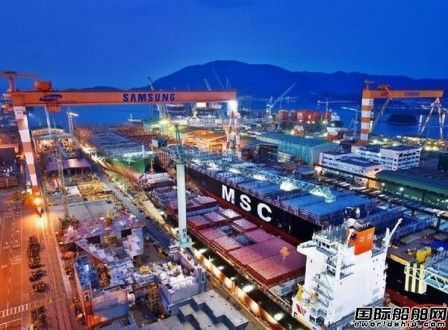
China's shipbuilding technology was significantly behind South Korea's in the past, but it has now caught up to about 90% in conventional ship types such as bulk carriers. In the LNG carrier sector, which demands higher technology, South Korea still holds an overwhelming advantage with an 87% market share last year. The gap between China and South Korea remains significant, but it is unknown when China will catch up. This was stated by a relevant person in the South Korean shipbuilding industry.
Affected by market conditions and performance, the three major South Korean shipbuilders, led by Hyundai Heavy Industries Group, have significantly reduced their R&D spending over the past few years. However, with a substantial increase in orders, starting this year, the three major South Korean shipbuilders have decided to increase R&D spending. This is not only an urgent need to maintain short-term order performance but also a strategic move and long-term plan to distance themselves from the closely pursuing China and ensure a competitive advantage.
R&D personnel have decreased year by year, and the three major South Korean shipbuilders have significantly reduced their R&D spending.
Affected by factors such as the long-term downturn in the international shipbuilding market, reduced orders, and the rigid rise in raw material costs, the economic efficiency of the three major South Korean shipbuilding companies, Hyundai Heavy Industries Group, Daewoo Shipbuilding & Marine Engineering, and Samsung Heavy Industries, has deteriorated sharply in recent years, and the funds invested in technological R&D have also been significantly reduced. In the three years from 2019 to 2021, the R&D expenses of the three major shipbuilders accounted for only 1% of their operating revenue.
According to statistics, as of the third quarter of 2021, Korea Shipbuilding & Offshore Engineering, a second-tier holding company responsible for the shipbuilding business of Hyundai Heavy Industries Group, invested 54.4 billion won (approximately US$45 million) in R&D that year, accounting for only 0.5% of the company's operating revenue; Daewoo Shipbuilding & Marine Engineering invested 47.7 billion won (approximately US$39 million) in R&D that year, accounting for 1.5% of the company's operating revenue; and Samsung Heavy Industries invested 37.1 billion won (approximately US$30 million) in R&D that year, accounting for only 0.8% of the company's operating revenue.
In stark contrast, as early as 10 years ago, the annual R&D expenses of the three major South Korean shipbuilders all exceeded 100 billion won. For example, Samsung Heavy Industries invested 163.1 billion won (approximately US$150 million at the time) in R&D in 2012, but this decreased to 50.2 billion won (approximately US$45 million at the time) in 2020, a decrease of more than two-thirds; Daewoo Shipbuilding & Marine Engineering invested 101.6 billion won (approximately US$93 million at the time) in R&D in 2012, but this decreased to 72.2 billion won (approximately US$64.7 million at the time) in 2020, a reduction of about 30%.
At the same time, the number of R&D personnel in the South Korean shipbuilding industry has also been decreasing year by year. According to the "Technology and Patent Trends in the Shipbuilding Field" report released by the Korea Intellectual Property Office (KIPO) in August 2020, the number of R&D personnel in the South Korean shipbuilding field decreased from 1,738 in 2014 to 822 in 2018, a decrease of more than half. During the same period, R&D expenses in the South Korean shipbuilding field decreased from 385.5 billion won (approximately US$350 million) to 141.8 billion won (approximately US$128 million), a decrease of about 63.22%. 
South Korean shipbuilding industry insiders analyzed that the sharp decline in R&D investment by South Korean shipbuilders is due to the impact of the downturn in the shipbuilding market and the decline in orders, leading to a deterioration in performance.
It is understood that, starting with an operating loss of 1501.9 billion won (approximately US$1.26 billion) in 2015, Samsung Heavy Industries has been in the red for seven consecutive years until 2021, with a total cumulative loss of nearly US$4.5 billion, resulting in the erosion of some capital. To address this issue, Samsung Heavy Industries conducted a 5:1 non-compensatory capital reduction of all its stocks last year, aiming to improve the company's financial structure, reduce losses, and strive to avoid concerns about future capital erosion.
Daewoo Shipbuilding & Marine Engineering also suffered significant losses for five consecutive years from 2012 to 2016, with an average annual operating loss of 11 trillion won (approximately US$890 million), and its cash flow severely deteriorated. During Daewoo Shipbuilding & Marine Engineering's structural adjustment process, the problem of its poor financial structure became even more prominent, and it was once on the verge of bankruptcy.
Although the situation of Hyundai Heavy Industries Group, South Korea's largest shipbuilder, is better than that of Samsung Heavy Industries and Daewoo Shipbuilding & Marine Engineering, its shipbuilding business has been hovering on the brink of profit and loss in recent years. In 2020, Korea Shipbuilding & Offshore Engineering achieved an operating profit of 74.4 billion won, a year-on-year decrease of 74.4%; its net profit was a loss of 835.2 billion won (approximately US$750 million). In 2021, Korea Shipbuilding & Offshore Engineering's operating loss was 1384.8 billion won (approximately US$1.156 billion), turning from a slight surplus in 2020 to a deficit; its net profit was a loss of 1140 billion won (approximately US$950 million), with the loss further expanding.
To counter Chinese competition, the three major South Korean shipbuilders will begin increasing R&D spending this year.
Although the three major shipbuilders are deeply mired in losses, some voices in the South Korean shipbuilding industry point out that the current global shipbuilding market situation and competitive environment are undergoing profound changes, and increasing R&D investment is a necessary move.
On the one hand, the International Maritime Organization (IMO) is introducing and implementing various new environmental regulations to reduce carbon emissions from the shipping industry. Therefore, not only is the demand for the renewal and replacement of LNG carriers increasing, but the market also has high expectations for the development of future environmentally friendly ships such as ammonia and hydrogen fuel-powered vessels.
On the other hand, in order to cope with fierce competition from Chinese shipbuilders, South Korean shipbuilders urgently need to increase R&D investment. In 2021, China received new ship orders totaling 22.86 million corrected gross tons (CGT), achieving a market share of 49%, while South Korea ranked second with a market share of 37%. China's fierce pursuit has put South Korean shipbuilders on edge. 
Fortunately, the foundation for R&D investment in the South Korean shipbuilding industry will gradually become solid. In 2021, South Korean shipbuilders received new ship orders that reached the highest value in eight years, and it is expected that the three major South Korean shipbuilders will return to profitability around 2023, when these new ships are delivered.
However, South Korean shipbuilders will not wait until they become profitable before increasing R&D investment. It is reported that the three major shipbuilders plan to increase their R&D investment from this year, focusing on the development of environmentally friendly and intelligent ship technologies. It is worth mentioning that the 1.5 trillion won (approximately US$1.25 billion) in funds generated by Hyundai Heavy Industries Group's failed acquisition of Daewoo Shipbuilding & Marine Engineering will be invested in the technological development of future new businesses such as autonomous navigation vessels.
Lee Eun-chang, deputy research fellow at the Korea Institute for Industrial Economics & Trade, said: "Due to the continuous strengthening of environmental regulations in the maritime industry, in order to ensure the competitiveness of the South Korean shipbuilding industry in the field of environmentally friendly ships, South Korean shipbuilders need to increase R&D investment. Although the financial situation of the three major shipbuilders is not good at present, led by Hyundai Heavy Industries Group, which has relatively greater investment capacity, they should increase R&D spending." (Wang Chu)
Related News

Address: No. 6, Xingyuan Avenue, Rucheng Street, Rugao City, Jiangsu Province
Tel: 86-513-87268999、86-513-7268666
Fax: 86-513-87268998
Email: info@ntlw.com
WeChat:15335077201

WeChat Official Account
Video account
Douyin account
Copyright © 2025 Nantong Liwei Machinery Co., Ltd.丨Powered by:www.300.cn丨SEO