

58 ships! Global new ship orders halved! Chinese shipbuilders remain at the top despite the downturn
2025-08-19 14:06
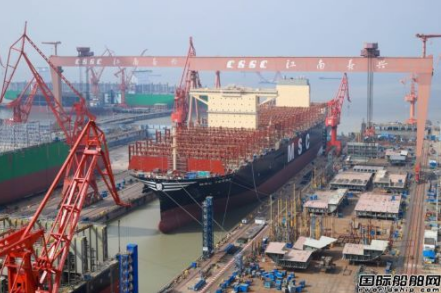
In July this year, global new ship orders plummeted by half, but Chinese shipbuilders remained firmly at the top of the industry rankings. Although affected by factors such as U.S. policies and market fluctuations, Chinese shipbuilders saw a year-on-year decline in order volumes this year, their market share and leading position in the global shipbuilding industry remain significant.
According to data released by Clarkson on August 12, global new ship orders in July totaled 58 vessels with a combined 2.03 million corrected gross tons (CGT), representing a 58% year-on-year decline from the 4.87 million CGT recorded in the same period last year, and a 43% month-on-month decrease from the 3.54 million CGT in June. Among these, Chinese shipbuilders secured 43 new ship orders totaling 1.52 million CGT, accounting for 75% of the global market share and ranking first; South Korean shipbuilders secured 8 orders totaling 330,000 CGT, accounting for only 16% of the global market share and ranking second.
From January to July this year, the global cumulative volume of new ship orders reached 788 vessels totaling 23.26 million CGT, a decrease of 51% compared to the 1,973 vessels totaling 47.65 million CGT during the same period last year. Among these, Chinese shipyards secured 463 new ship orders totaling 1,303 million CGT, a year-on-year decrease of 59%, with a market share of 56%, ranking first; South Korean shipyards secured 123 new ship orders totaling 524 million CGT, a year-on-year decrease of 37%, with a market share of 23%, ranking second.
As of the end of July this year, the global order backlog stood at 164.79 million CGT, a decrease of 440,000 CGT from the end of June. Among these, China's order backlog for new ships reached 98.37 million CGT, an increase of 13.37 million CGT year-on-year, maintaining its leading position with a 60% market share; South Korea's order backlog for new ships was 35.22 million CGT, a decrease of 4.03 million CGT year-on-year, with a 21% market share, ranking second.
In July this year, new shipbuilding prices continued to maintain a stable trend. The Clarkson Newbuilding Price Index stood at 186.65 points, a decrease of 0.46 percentage points from 187.11 points in June, and an increase of approximately 47% compared to 126.72 points in the same period five years ago.
By ship type, the price of a 174,000-cubic-meter large LNG carrier was US$251 million, down US$4 million from June; the price of a very large crude carrier (VLCC) was US$126 million, unchanged from June; and the price of a 22,000–24,000 TEU ultra-large container ship was US$273 million, unchanged from June.
The South Korean shipbuilding industry stated that in July, South Korean shipbuilders accounted for only 16% of the global new ship order market share, lagging far behind China in terms of order volume. However, this was due to South Korean shipbuilders continuing their selective order-taking strategy focused on high-value-added vessels, which is beneficial for improving profitability and enhancing competitiveness.
Looking at the order intake situation for the first seven months of this year, China topped the order intake rankings five times in February, April, May, June, and July, while South Korea only ranked first twice in January and March.
Filipe Gouveia, Shipping Analysis Manager at the Baltic International Maritime Council (BIMCO), stated that the U.S. Trade Representative's Office (USTR) policy of imposing port fees on Chinese-built vessels, combined with a global decline in new ship orders and changes in vessel types, collectively led to China's shipbuilding companies' order share dropping from 72% in the second half of last year to 52% in the first half of this year.
Following the USTR's release of a draft Section 301 report targeting China's shipping, logistics, and shipbuilding industries in late February, South Korean shipyards temporarily surpassed China in order volume in March. However, after the USTR announced revised port fee collection plans in April, which eased charges on Chinese-built vessels or newbuilds owned by non-Chinese companies, shipowners returned to Chinese shipyards to place orders.
Gouveia pointed out that the current shipbuilding capacity capable of replacing Chinese shipbuilders is quite limited. Even if shipowners avoid ordering new ships in China due to the USTR's port fee policy, it would be difficult to find sufficient alternative capacity. As the world's second and third largest shipbuilding nations, South Korean and Japanese shipbuilders face challenges in expanding their capacity, primarily due to labor shortages caused by declining populations. This demographic issue has driven up labor costs, weakening the competitiveness of South Korean and Japanese shipbuilders in the global market.
In his view, even with the negative impact of U.S. policies, if global new ship orders had not seen a significant decline since the beginning of this year, Chinese shipbuilders' order share would likely be even higher.
Looking ahead, Gouveia believes China's position remains solid: “China's dominant position in the shipbuilding industry is unlikely to change significantly in the short term, but competition may intensify in the medium term. Countries like the Philippines and Vietnam, which are currently only small-scale builders of bulk carriers and oil tankers, may leverage their low labor costs to expand their presence in the global shipbuilding market.”
Translated with DeepL.com (free version)
In terms of ship type, the price of a 174,000-cubic-meter large LNG carrier was US$251 million, down US$4 million from June; the price of a very large crude carrier (VLCC) was US$126 million, unchanged from June; and the price of a 22,000-24,000 TEU ultra-large container ship was US$273 million, unchanged from June.
The South Korean shipbuilding industry stated that in July, South Korean shipbuilders accounted for only 16% of the global market share for new ship orders, lagging far behind China in terms of order volume. However, this is due to South Korean shipbuilders continuing their selective order-taking strategy focused on high-value-added vessels, which is beneficial for improving profitability and enhancing competitiveness.
Looking at the order intake situation for the first seven months of this year, China topped the order intake rankings five times in February, April, May, June, and July, while South Korea only ranked first twice in January and March.
Filipe Gouveia, Shipping Analysis Manager at the Baltic International Maritime Council (BIMCO), stated that the U.S. Trade Representative's Office (USTR) policy of imposing port fees on Chinese-built vessels, combined with a global decline in new ship orders and changes in vessel types, collectively led to China's shipbuilding companies' order share dropping from 72% in the second half of last year to 52% in the first half of this year.
Following the USTR's release of a draft Section 301 report targeting China's shipping, logistics, and shipbuilding industries in late February, South Korean shipyards temporarily surpassed China in order volume in March. However, after the USTR announced revised port fee collection plans in April, which eased charges on Chinese-built vessels or newbuilds owned by non-Chinese companies, shipowners returned to Chinese shipyards to place orders.
Gouveia pointed out that the current alternative shipbuilding capacity to replace Chinese shipbuilders is quite limited. Even if shipowners avoid ordering new ships in China due to the USTR's port fee policy, it would be difficult to find sufficient alternative capacity. As the world's second and third largest shipbuilding nations, South Korean and Japanese shipbuilders face challenges in expanding their capacity, primarily due to labor shortages caused by declining populations; this demographic issue has driven up labor costs, weakening the competitiveness of South Korean and Japanese shipbuilders in the global market.
In his view, even with the negative impact of U.S. policies, if global new ship orders had not declined significantly since the beginning of this year, Chinese shipbuilders' order share would likely have been even higher.
Looking ahead, Gouveia believes China's position remains solid: "China's dominant position in the shipbuilding industry is unlikely to change significantly in the short term, but competition may intensify in the medium term. Countries like the Philippines and Vietnam, which are currently only small-scale builders of bulk carriers and oil tankers, may leverage their low labor costs to expand production capacity. Meanwhile, while the US and India currently have limited shipbuilding capabilities, their governments are actively promoting the development of domestic shipbuilding industries. However, even if successful, it will take time to expand production capacity."
Translated with DeepL.com (free version)
Related News

Address: No. 6, Xingyuan Avenue, Rucheng Street, Rugao City, Jiangsu Province
Tel: 86-513-87268999、86-513-7268666
Fax: 86-513-87268998
Email: info@ntlw.com
WeChat:15335077201

WeChat Official Account
Video account
Douyin account
Copyright © 2025 Nantong Liwei Machinery Co., Ltd.丨Powered by:www.300.cn丨SEO