

Trump's Return to the White House: Shipping Market Faces a New Round of "America First" Impacts
2024-11-13 09:00
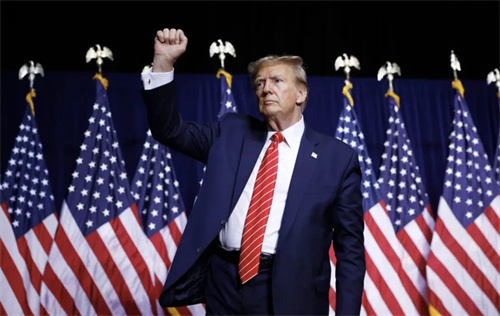
In the early morning of November 6th, local time, US Republican presidential candidate Trump announced his victory in the 2024 presidential election. This news quickly sent ripples through global markets, and the shipping industry was inevitably caught in the crosscurrents. Trump's victory signals the return of the "America First" policy, and for the shipping market, this political shift could bring about profound changes.
1. Trump's Key Policy Positions Related to Shipping
The Federal Reserve
During his presidency, Trump repeatedly criticized Federal Reserve Chairman Powell, demanding lower interest rates, and stated that if elected, he would no longer support Powell's reappointment. He advocated for the president to have a greater say in interest rate setting, to lower inflation through other means rather than relying on interest rate hikes. This pressure sparked concerns within the Republican Party about the independence of the Federal Reserve; similar practices of maintaining low interest rates to stimulate the economy in the 1970s could lead to rising inflation.
Trade and Tariffs
During his first term, Trump broke with decades of bipartisan support for trade liberalization, imposing high tariffs on China and more targeted tariffs on imported steel, aluminum, and products (including those from allied countries). In a second term, Trump plans to increase tariffs on Chinese goods by at least 60% and impose tariffs of 10% to 20% on other countries.
Energy and Environment
Trump considers climate change a "hoax" and plans to eliminate electric vehicle tax credits, end green technology subsidies, including incentives in the Inflation Reduction Act. His policy platform calls for removing restrictions on US energy production and overturning Biden administration environmental regulations, such as controls on coal plant emissions and methane leaks.
Geopolitics
NATO: Trump is skeptical of NATO, believing that many member states have failed to meet defense spending targets, and has repeatedly hinted at reducing the US role in NATO, even considering withdrawing. Although he did not formally withdraw from NATO during his term, his policies raised concerns among allies about US security commitments.
Iran: Trump adopted a "maximum pressure" strategy, using severe sanctions to restrict Iran's economic resources and attempting to force Iran into a broader nuclear agreement. He considered this strategy highly successful, claiming that if re-elected, he would reach an agreement to completely eliminate nuclear weapons. However, Trump's hardline stance also led to further tensions in US-Iran relations.
Ukraine-Russia: Trump claims he could reach a peace agreement in Ukraine within 24 hours, possibly by pressuring both sides to compromise. He is inclined to build relations with Russia, but the effectiveness of his negotiations with Putin on actual policies has been limited.
Middle East: Trump's Abraham Accords facilitated the normalization of relations between Israel and some Arab countries, becoming a major achievement of his Middle East policy. He tends to reduce US military presence in Syria and Iraq, but also supports Israel's security defense, although he may push for Israel to "end" the conflict with Gaza.
North Korea: Trump adopted a unique North Korea policy, initially taking a hardline stance against Kim Jong Un, followed by an ice-breaking meeting. Although he had multiple contacts with Kim Jong Un, attempting to reach a denuclearization agreement, he ultimately failed to achieve any substantial results. If re-elected, he may seek negotiations with North Korea again.
2. What is the impact on the global shipping market?
The core of the Trump administration has always been the "America First" policy, which fundamentally aims to protect American manufacturing, combat imported goods to reduce trade deficits. If the new government continues this strategy, it will inevitably have a significant impact on the existing global supply chain, especially given China's position as the global manufacturing center; re-establishing tariff barriers will directly impact the shipping market.
The tariff storm, the trend of deglobalization, and the hardline stance on energy and environmental issues initiated by Trump during his presidency have already had a profound impact on various shipping sectors. Now, with Trump's return to the White House, the shipping market will face a more complex and challenging situation. From container shipping to dry bulk and oil and gas transportation, each segment will experience a new round of shocks and adjustments as his policies change.
Container Shipping: Globalisation Stalled, Cargo Flows Altered
Container shipping has always been highly dependent on globalization and free trade, making it particularly vulnerable to geopolitical instability. Trump's high tariffs are not only aimed at China, a trade rival, but may also affect more friendly nations.
Analysis firm Sea-Intelligence points out that in the short term, this may lead some importers to rush shipments to the US to avoid upcoming tariffs. However, in the long term, supply chains and cargo flows will inevitably change. Importers will try to adjust their procurement models to minimize the impact of tariffs, "which isn't necessarily bad news for shipping companies, it just means they may need to adjust their shipping networks to accommodate different trade flows."
Traditional China-US routes will gradually lose market share, while more alternative routes, such as the China-Mexico route, may see growth. As ONE CEO Jeremy Nixon said, "Goods will still flow to end consumers, just the route will change." Container shipping companies need to quickly adapt to these new flows and actively adjust their capacity networks to ensure that their business is not affected by policy adjustments. This decentralization trend is a significant characteristic of global trade fragmentation.
Gas Transportation: Uncertainty Amplified
For the LNG and LPG transportation markets, Trump's policies may push them into new uncertainties. He has always been friendly to the fossil fuel industry and dismissive of clean energy.
A recent report from shipbroker BRS points out that China is a major importer of US LPG and LNG, and any threat to these flows could "disrupt" the transportation market. Trump's return may lead to greater reliance on executive orders and tariffs to adjust trade, which for shipping companies means not only increased policy risks but also operational uncertainty.
Tanker Market: A "Double-Edged Sword" of Sanctions and Conflict
Trump's influence on the tanker market mainly stems from his hardline stance on the Middle East, particularly on Iran.
Mark Cameron, COO of Ardmore Shipping, said in September that Trump's return to power means the war in Ukraine could end quickly, which would be a negative for tanker trade, while a potential new administration may adopt stricter policies towards Iran, which would be a positive factor for tanker trade.
While resolving the Ukraine-Russia conflict may put short-term pressure on tanker demand, stricter sanctions on Iran will force grey tankers out of the market, increasing the demand for compliant vessels.
Trump's policies are always full of uncertainty, as Alan Hatton, CEO of Foreguard Shipping, said, "Bad news for the world is often not entirely unfavorable for the shipping market."
Henrik Hartzell, Senior Advisor at GSB Tankers, predicts that with Trump's return to the White House, the shipping industry should anticipate greater "operational complexity."
According to BRS analysis, Iran's crude oil and condensate exports recently reached 1.6 million barrels/day, the highest level since 2018. BRS expects that upon Trump's election, the new US administration will swiftly strengthen the enforcement of existing sanctions against Iran's oil industry, including its gray tanker network used for oil exports.
Dry Bulk Market: Trade War Aftermath Lingers, Agricultural Products and Steel Bear the Brunt
The dry bulk market bore the brunt of the previous US-China trade war, with agricultural products and steel transportation demand being particularly affected. Trump's policy restricting Chinese agricultural imports led China to turn to importing Brazilian soybeans.
Clarkson data shows that the US-China trade war led to a 0.5% decline in global dry bulk ton-mile growth in 2018 and 2019, respectively.
If Trump launches another trade war, it is foreseeable that China will continue to reduce its imports of US agricultural products, which will deal a long-term blow to the dry bulk market. And if a fragmented globalization pattern, similar to a "commodity bloc," forms, the future of dry bulk shipping will be even more complex.
Saad Rahim, Chief Economist at Trafigura Group, expressed concern about the development potential of two major commodity blocs: one comprising Russia, Iran, India, and China, and the other Europe, the United States, and Latin America.
Shamika Sirimanne, Director of Technology and Logistics at the United Nations Conference on Trade and Development, pointed out that since the trade war erupted in 2017, US-China trade has continued to decline, with China's imports from the US falling by 8%. She warned that supply chain diversification based on geopolitical rather than economic reasons could lead to decreased trade efficiency and longer supply chains.
Car Transport: EV "Export Boom" Faces Headwind
The Biden administration imposed a 100% tariff on electric vehicles made in China. Meanwhile, Trump, during a rally speech in Detroit, threatened to impose tariffs of 200% or even 1000% on Chinese cars if elected president. This is not only a setback for the automotive manufacturing industry but will also directly impact the supply and demand balance in the car transport market.
For car transport companies, significant restrictions on EV exports could lead to a decrease in transport demand. This also means that car transport companies need to pay more attention to market uncertainties when evaluating future business.

Green Shipping: Global Harmonization Hindered, Regional Policies May Emerge
Trump's indifferent attitude towards climate change could weaken the International Maritime Organization's (IMO) leadership in global decarbonization efforts. Analysts at Sea-Intelligence point out that a Trump victory might lead to the IMO's global emission reduction targets being stalled, and instead encourage countries to introduce more of their own regional emission reduction policies.
At the same time, Trump's "regression" in environmental policy could slow down the promotion of clean fuels like LNG. On one hand, demand for traditional fuels rises; on the other, shipping companies' willingness to invest in new technologies and clean fuels decreases, leading to a slowdown in the industry's green transition.
This policy shift means shipping companies must deal with more complex and diverse policies, and compliance costs for cross-regional shipping will further increase. For shipping companies facing decarbonization pressure, this is not only an environmental compliance challenge but also a cost structure challenge.
3. Navigating Through Volatility
From the perspective of Shipping Circle Focus, Trump's "2.0" version of policies is full of uncertainty. His "anti-globalization" stance, protectionist tendencies, and disregard for climate change will inevitably bring greater market volatility to the shipping market. However, new opportunities are also inherent. The restructuring of globalized and regionalized supply chains, energy landscapes, and the wavering environmental agenda will all become catalysts for a new round of reshuffling in the shipping market.
Facing the potential supply chain restructuring caused by Trump's policies, shipping companies must recognize that the development trends of regionalization, friend-shoring, and near-shoring will gradually become the new normal. Furthermore, while the pace of globalization slows, it does not mean the disappearance of vitality in various regional markets. On the contrary, emerging markets such as Southeast Asia and Africa will continue to grow in the coming years, becoming new anchors in the global logistics chain. Shipping companies can seize this opportunity to enter emerging markets at the right time, and by cooperating with local ports and logistics providers, build tighter regional networks, thereby positioning themselves favorably amidst the tide of de-globalization.
Related News

Address: No. 6, Xingyuan Avenue, Rucheng Street, Rugao City, Jiangsu Province
Tel: 86-513-87268999、86-513-7268666
Fax: 86-513-87268998
Email: info@ntlw.com
WeChat:15335077201

WeChat Official Account
Video account
Douyin account
Copyright © 2025 Nantong Liwei Machinery Co., Ltd.丨Powered by:www.300.cn丨SEO